For the biblical Mount Sinai, and a discussion of its possible locations, see
Mount Sinai (Bible) . For other uses, see Mount Sinai (disambiguation).
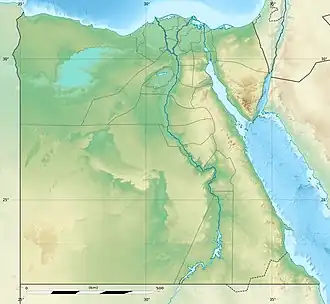
Mount Sinai ,[ b] Jabal Musa (Arabic: جَبَل مُوسَىٰ , lit. 'Mountain of Moses'), is a mountain on the Sinai Peninsula of Egypt. It is one of several locations claimed to be the biblical Mount Sinai , the place where, according to the sacred scriptures of the three major Abrahamic religions (Torah, Bible, and Quran), the Hebrew prophet Moses received the Ten Commandments from God.[ 1] [ 2] [ 3]
It is a 2,285-meter (7,497 ft), moderately high mountain near the city of Saint Catherine in the region known today as the Sinai Peninsula . It is surrounded on all sides by higher peaks in the mountain range of which it is a part. For example, it lies next to Mount Catherine which, at 2,629 m or 8,625 ft, is the highest peak in Egypt.[ 4]
Geology
Jebel Musa in the 1869 Ordnance Survey of the Peninsula of Sinai, shown north of Mount Catherine (Jebel Katarina) and south of Willow Peak (Ras es-Safsafeh) Mount Sinai's rocks were formed during the late stage of the evolution of the Arabian-Nubian Shield. Mount Sinai displays a ring complex[ 5]
Religious significance
Judaism and Christianity
Immediately north of the mountain is the 6th-century Saint Catherine's Monastery. The summit has a mosque that is still used by Muslims, and a Greek Orthodox chapel, constructed in 1934 on the ruins of a 16th-century church, that is not open to the public. The chapel encloses the rock which is considered to be the source for the biblical Tablets of Stone.[ 6] [ 1] [ 2] [ 3]
Islam
The Jabal Musa is associated with the Islamic prophet Mūsā ibn ʿImrān (i.e., Moses).[ 2] [ 7] [ 8] Ṭūr Saināʾ ,[ 9] Ṭūr Sīnīn ,[ 10] aṭ-Ṭūr [ 11] [ 12] al-Jabal (both meaning "the Mount").[ 13] Wād ṬuwāValley of Tuwa ), it is considered as being muqaddas [ 14] [ 15] [ 16] [ 17] Al-Buqʿah Al-Mubārakah ("The blessed Place").[ 12]
Ascent and summit
There are two principal routes to the summit. The longer and shallower route, Siket El Bashait , takes about 2.5 hours on foot, though camels can be used. The steeper, more direct route (Siket Sayidna Musa ) is up the 3,750 "steps of penitence" in the ravine behind the monastery.[ 18]
A panoramic view from the summit of Mount Sinai
See also
Hashem El Tarif
Sacred mountains
Jebel Musa, Morocco, a similarly named mountain in Morocco
References
^ a b Gray, John (January 1954). "The Desert Sojourn of the Hebrews and the Sinai-Horeb Tradition". Vetus Testamentum . 4 (1). Leiden and Boston: Brill Publishers on behalf of the International Organization for the Study of the Old Testament: 148– 154. doi:10.1163/156853354X00136 . ISSN 1568-5330 . JSTOR 1515877 . ^ a b c Rubin, Uri (April 2014). "Moses and the Holy Valley Ṭuwan: On the Biblical and Midrashic Background of a Qur'ānic scene". Journal of Near Eastern Studies . 73 (1). Chicago: University of Chicago Press: 73– 81. doi:10.1086/674614 . ISSN 1545-6978 . ^ a b Yadin, Azzan (Winter 2003). "קול as Hypostasis in the Hebrew Bible". Journal of Biblical Literature . 122 (4). Atlanta: Society of Biblical Literature: 601– 626. doi:10.2307/3268068 . ISSN 0021-9231 . ^ "Sinai Geology" . AllSinai.info. Archived from the original on 2011-07-18. Retrieved 2006-08-29 .^ Hanaa M. Salem and A. A. ElFouly, "Minerals Reconnaissance at Saint Catherine Area, Southern Central Sinai, Egypt and their Environmental Impacts on Human Health" Archived 2012-06-01 at the Wayback Machine. ICEHM2000, Cairo University, Egypt, September 2000, pp. 586–98^ "Mount Sinai, Egypt" . Places of Peace and Power. Archived from the original on 2011-02-24. Retrieved 2006-08-29 .^ Sharīf, J.; Herklots, G. A. (1832). Qanoon-e-Islam: Or, The Customs of the Moosulmans of India; Comprising a Full and Exact Account of Their Various Rites and Ceremonies, from the Moment of Birth Till the Hour of Death koh-e-toor. ^ Abbas, K. A. (1984). The World is My Village: A Novel with an Index 978-0-8364-1131-7 . Archived from the original on 2023-12-28. Retrieved 2021-06-01 . ^ Quran 23:20
^ Quran 95:2
^ Quran 2:63–93
^ a b Quran 28:3–86
^ Quran 7:103–156
^ Quran 20:9–99
^ Quran 79:15–25
^ Ibn Kathir (2013-01-01). Dr Mohammad Hilmi Al-Ahmad (ed.). Stories of the Prophets: [قصص الأنبياء [انكليزي دَار الْـكُـتُـب الْـعِـلْـمِـيَّـة ). ISBN 978-2745151360 . Archived from the original on 2023-12-28. Retrieved 2021-06-01 . ^ Elhadary, Osman (2016-02-08). "11, 15". Moses in the Holy Scriptures of Judaism, Christianity and Islam: A Call for Peace 978-1483563039 . ^ "Mount Sinai" . AllSinai.info. Archived from the original on 2011-07-18. Retrieved 2006-08-29 .
^ Egyptian Arabic: جَبَل مُوسَىٰ , romanized: Gabal Mūsā Ⲡⲧⲟⲟⲩ Ⲥⲓⲛⲁ , romanized: Ptoou Sina ܛܘܪܐ ܕܣܝܢܝ Ṭūrāʾ d-Sīnayy Ὄρος Σινά , romanized: Oros Sina Mons Sinai הַר סִינַי , romanized: Har Sīnay
^ Hebrew: הַר סִינַי Har Sīnay ; Aramaic: ܛܘܪܐ ܕܣܝܢܝ Ṭūrāʾ dəSīnăy ; Coptic: Ⲡⲧⲟⲟⲩ Ⲥⲓⲛⲁ
External links
People and things in the Quran
Characters
Non-humans
Allāh ('The God')
Names of Allah found in the Quran, such as Karīm (Generous)
Animals
Related
The baqara (cow) of Israelites
The dhiʾb (wolf) that Jacob feared could attack Joseph
The fīl (elephant) of the Abyssinians
Ḥimār (Domesticated donkey)The hud-hud (hoopoe) of Solomon
The kalb (dog) of the sleepers of the cave
The namlah (female ant) of Solomon
The nūn (fish or whale) of Jonah
The nāqat (she-camel) of Ṣāliḥ Non-related
ʿAnkabūt (Female spider)Dābbat al-Arḍ (Beast of the Earth)Ḥimār (Wild ass)Naḥl (Honey bee)Qaswarah ('Lion', 'beast of prey' or 'hunter')
Malāʾikah (Angels)
Angels of Hell
Bearers of the Throne
Harut and Marut
Jundallah
Kirāman Kātibīn (Honourable Scribes)
Muqarrabun
Jibrīl (Gabriel, chief)
Ar-Rūḥ ('The Spirit')
Ar-Rūḥ al-Amīn ('The Trustworthy Spirit')Ar-Rūḥ al-Qudus ('The Holy Spirit')
Angel of the Trumpet (Isrāfīl or Raphael)
Malakul-Mawt (Angel of Death, Azrael)Mīkāil (Michael)
Jinn (Genies)
Jann ʿIfrīt Sakhr (Asmodeus)Qarīn Shayāṭīn (Demons)
Iblīs ash-Shayṭān (the (chief) Devil)
Mārid ('Rebellious one') Others
Prophets
Mentioned
Ādam (Adam)
Al-Yasaʿ (Elisha)
Ayyūb (Job)
Dāwūd (David)
Dhūl-Kifl (Ezekiel?)
Hārūn (Aaron)
Hūd (Eber?)
Idrīs (Enoch?)
Ilyās (Elijah)
ʿImrān (Joachim the father of Maryam)
Isḥāq (Isaac)
Ismāʿīl (Ishmael)
Lūṭ (Lot)
Ṣāliḥ
Shuʿayb (Jethro, Reuel or Hobab?)
Sulaymān ibn Dāwūd (Solomon son of David)
Yaḥyā ibn Zakariyyā (John the Baptist the son of Zechariah)
Yaʿqūb (Jacob)
Yūnus (Jonah)
Dhūn-Nūn ('He of the Fish (or Whale)' or 'Owner of the Fish (or Whale)')Ṣāḥib al-Ḥūt ('Companion of the Whale')
Yūsuf ibn Ya‘qūb (Joseph son of Jacob)
Zakariyyā (Zechariah) Ulul-ʿAzm
Muḥammad
Aḥmad
Other names and titles of Muhammad
ʿĪsā (Jesus)
Al-Masīḥ (The Messiah)Ibn Maryam (Son of Mary)
Mūsā Kalīmullāh (Moses He who spoke to God)
Ibrāhīm Khalīlullāh (Abraham Friend of God)
Nūḥ (Noah) Debatable ones
ʿUzair (Ezra?)
Dhūl-Qarnain
Luqmān
Maryam (Mary)
Ṭālūt (Saul or Gideon?)
Implied
Irmiyā (Jeremiah)
Ṣamūʾīl (Samuel)
Yūshaʿ ibn Nūn (Joshua, companion and successor of Moses)
People of Prophets
Good ones
Adam's immediate relatives
Believer of Ya-Sin
Family of Noah
Father Lamech
Mother Shamkhah bint Anush or Betenos
Luqman's son
People of Abraham
Mother Abiona or Amtelai the daughter of Karnebo
Ishmael's mother
Isaac's mother
People of Jesus
Disciples (including Peter)
Mary's mother
Zechariah's wife
People of Solomon
Mother
Queen of Sheba
Vizier
Zayd (Muhammad's adopted son) People of
Brothers (including Binyāmin (Benjamin) and Simeon)
Egyptians
ʿAzīz (Potiphar, Qatafir or Qittin)Malik (King Ar-Rayyān ibn Al-Walīd))Wife of ʿAzīz (Zulaykhah)
Mother People of
Egyptians
Believer (Hizbil or Hizqil ibn Sabura)
Imraʾat Firʿawn (Āsiyá bint Muzāḥim the Wife of Pharaoh, who adopted Moses)Magicians of the Pharaoh
Wise, pious man
Moses' wife
Moses' sister-in-law
Mother
Sister
Evil ones
Āzar (possibly Terah)
Firʿawn (Pharaoh of Moses' time)
Hāmān
Jālūt (Goliath)
Qārūn (Korah, cousin of Moses)
As-Sāmirī
Abū Lahab
Slayers of Ṣāliḥ's she-camel (Qaddar ibn Salif and Musda' ibn Dahr) Implied or
Abraha
Abu Bakr
Bal'am/Balaam
Barṣīṣā
Caleb or Kaleb the companion of Joshua
Luqman's son
Nebuchadnezzar II
Nimrod
Rahmah the wife of Ayyub
Shaddad
Groups
Mentioned
Aṣḥāb al-Jannah
People of Paradise
People of the Burnt Garden Aṣḥāb as-Sabt (Companions of the Sabbath)Jesus' apostles
Ḥawāriyyūn (Disciples of Jesus)
Companions of Noah's Ark
Aṣḥāb al-Kahf war-Raqīm (Companions of the Cave and Al-Raqaim?Companions of the Elephant
People of al-Ukhdūd
People of a township in Surah Ya-Sin
People of Yathrib or Medina
Qawm Lūṭ (People of Sodom and Gomorrah)Nation of Noah Tribes,
‘Ajam
Ar-Rūm (literally 'The Romans')Banī Isrāʾīl (Children of Israel)Muʾtafikāt (Sodom and Gomorrah)People of Ibrahim
People of Ilyas
People of Nuh
People of Shuaib
Qawm Yūnus (People of Jonah)Ya'juj and Ma'juj/Gog and Magog
People of Fir'aun
Current Ummah of Islam (Ummah of Muhammad)
Aṣḥāb Muḥammad (Companions of Muhammad)
Anṣār (literally 'Helpers')
Muhajirun (Emigrants from Mecca to Medina)
People of Mecca
Children of Ayyub
Sons of Adam
Wife of Nuh
Wife of Lut
Yaʾjūj wa Maʾjūj (Gog and Magog)Son of Nuh Aʿrāb (Arabs
ʿĀd (people of Hud)
Companions of the Rass
Qawm Tubbaʿ (People of Tubba)
Quraysh
Thamūd (people of Ṣāliḥ)
Aṣḥāb al-Ḥijr ('Companions of the Stoneland') Ahl al-Bayt
Household of Abraham
Brothers of Yūsuf
Lot's daughters
Progeny of Imran
Household of Moses
Household of Muhammad
ibn Abdullah ibn Abdul-Muttalib ibn Hashim
Daughters of Muhammad
Muhammad's wives
Household of Salih
Implicitly
Amalek
Ahl as-Suffa (People of the Verandah)Banu Nadir
Banu Qaynuqa
Banu Qurayza
Iranian people
Umayyad Dynasty
Aus and Khazraj
People of Quba Religious
Ahl al-Dhimmah Kāfirūn
Majūs ZoroastriansMunāfiqūn (Hypocrites)Muslims
Ahl al-Kitāb (People of the Book)
Naṣārā (Christian(s) or People of the Injil)
Ruhban (Christian monks)
Qissis (Christian priest) Yahūd (Jews)
Ahbār (Jewish scholars)
Rabbani/Rabbi Sabians Polytheists
Meccan polytheists at the time of Muhammad
Mesopotamian polytheists at the time of Abraham and Lot
Locations
Mentioned
Al-Arḍ Al-Muqaddasah Al-Jannah (Paradise, literally 'The Garden')Jahannam (Hell)Door of Hittah
Madyan (Midian )Majmaʿ al-Baḥrayn Miṣr (Mainland Egypt)Salsabīl (A river in Paradise) In theArabian Peninsula
Al-Aḥqāf ('The Sandy Plains,' or 'the Wind-curved Sand-hills')
Iram dhāt al-ʿImād (Iram of the Pillars)Al-Madīnah (formerly Yathrib)ʿArafāt and Al-Mashʿar Al-Ḥarām
Al-Ḥijr (Hegra)Badr
Ḥunayn
Makkah (Mecca)
Bakkah
Ḥaraman Āminan ('Sanctuary (which is) Secure')Kaʿbah (Kaaba)Maqām Ibrāhīm (Station of Abraham)Safa and Marwa Sabaʾ (Sheba)
ʿArim Sabaʾ (Dam of Sheba)Rass Sinai Region
Al-Wād Al-Muqaddas Ṭuwan (The Holy Valley of Tuwa )
Al-Wādil-Ayman (The valley on the 'righthand' side of the Valley of Tuwa and Mount Sinai )
or Mount Tabor In Mesopotamia
Al-Jūdiyy
Munzalanm-Mubārakan ('Place-of-Landing Blessed')
Bābil (Babylon)Qaryat Yūnus ('Township of Jonah,' that is Nineveh) Religious
Bayʿa (Church)Miḥrāb Monastery
Masjid (Mosque, literally 'Place of Prostration')
Al-Mashʿar Al-Ḥarām Al-Masjid Al-Aqṣā (Al-Aqsa, literally 'The Farthest Place-of-Prostration')Al-Masjid Al-Ḥarām (The Sacred Mosque of Mecca)Masjid al-Dirar
A Mosque in the area of Medina, possibly:
Masjid Qubāʾ (Quba Mosque)The Prophet's Mosque Salat (Synagogue)
Implied
Antioch
Arabia
Al-Ḥijāz (literally 'The Barrier')
Al-Ḥajar al-Aswad (Black Stone) & Al-Hijr of Isma'il Cave of Hira
Ghār ath-Thawr (Cave of the Bull)Hudaybiyyah
Ta'if
Ayla
Barrier of Dhul-Qarnayn
Bayt al-Muqaddas & 'Ariha Bilād ar-Rāfidayn (Mesopotamia)Canaan Cave of Seven Sleepers
Dār an-Nadwa Jordan River
Nile River
Palestine River
Paradise of Shaddad
Events, incidents, occasions or times
Incident of Ifk
Laylat al-Qadr (Night of Decree)Event of Mubahala
Sayl al-ʿArim (Flood of the Great Dam of Ma'rib in Sheba)The Farewell Pilgrimage
Treaty of Hudaybiyyah
Battles or
Battle of al-Aḥzāb ('the Confederates')
Battle of Badr
Battle of Hunayn
Battle of Khaybar
Battle of Uhud
Expedition of Tabuk
Conquest of Mecca Days
Al-Jumuʿah (The Friday)As-Sabt (The Sabbath or Saturday)Days of battles
Days of Hajj
Doomsday Months of the
12 months: Four holy months
Ash-Shahr Al-Ḥarām (The Sacred or Forbidden Month)
Ramaḍān Pilgrimages
Al-Ḥajj (literally 'The Pilgrimage', the Greater Pilgrimage)Al-ʿUmrah (The Lesser Pilgrimage) Times for prayer Times for
Duʿāʾ ('Invocation'),
Ṣalāh and
Dhikr ('Remembrance', including
Taḥmīd ('Praising'),
Takbīr and
Tasbīḥ ):
Al-ʿAshiyy (The Afternoon or the Night)Al-Ghuduww ('The Mornings')
Al-Bukrah ('The Morning')Aṣ-Ṣabāḥ ('The Morning')Al-Layl ('The Night')
Al-ʿIshāʾ ('The Late-Night')Aẓ-Ẓuhr ('The Noon')Dulūk ash-Shams ('Decline of the Sun')
Al-Masāʾ ('The Evening')Qabl al-Ghurūb ('Before the Setting (of the Sun)')
Al-Aṣīl ('The Afternoon')Al-ʿAṣr ('The Afternoon')Qabl ṭulūʿ ash-Shams ('Before the rising of the Sun')
Implied
Ghadir Khumm
Laylat al-Mabit First Pilgrimage
Other
Holy books
Al-Injīl (The Gospel of Jesus)Al-Qurʾān (The Book of Muhammad)Ṣuḥuf-i Ibrāhīm (Scroll(s) of Abraham)At-Tawrāt (The Torah)
Ṣuḥuf-i-Mūsā (Scroll(s) of Moses)Tablets of Stone Az-Zabūr (The Psalms of David)Umm al-Kitāb ('Mother of the Book(s)') Objects
Heavenly food of Jesus' apostles
Noah's Ark
Staff of Musa
Tābūt as-Sakīnah (Casket of Shekhinah)Throne of Bilqis
Trumpet of Israfil Mentioned idols
'Ansāb
Jibt and Ṭāghūt (False god) Of Israelites
Baʿal
The ʿijl (golden calf statue) of Israelites Of Noah's people
Nasr
Suwāʿ
Wadd
Yaghūth
Yaʿūq Of Quraysh
Celestial Maṣābīḥ (literally 'lamps'):
Al-Qamar (The Moon)Kawākib (Planets)
Nujūm (Stars)
Plant matter
Baṣal (Onion)Fūm (Garlic or wheat)Shaṭʾ (Shoot)Sūq (Plant stem)Zarʿ (Seed)Fruits
ʿAdas (Lentil)Baql (Herb)Qith-thāʾ (Cucumber)Rummān (Pomegranate)Tīn (Fig)Zaytūn (Olive)In Paradise
Bushes, trees
Plants of Sheba
Athl (Tamarisk)Sidr (Lote-tree)
Līnah (Tender Palm tree)Nakhl (Date palm)Sidrat al-Muntahā
Zaqqūm
Liquids
Māʾ (Water or fluid)
Nahr (River)Yamm (River or sea)Sharāb (Drink)
Note: Names are sorted alphabetically. Standard form: Islamic name / Biblical name (title or relationship)
Ark of the Covenant topics
People
Moses
Kohanim
High Priest of Israel
Israelites
Levites
Bezalel
Tribe of Judah
Oholiab
Kehath
Tribe of Levi
Jeremiah
Joshua
Samuel
Uzzah
Solomon
Menelik I Lid Contents
Tablets of Stone
Ten Commandments
Manna
Aaron's rod Locations
Jericho Jordan River
Holy of Holies
Tabernacle
Ai
Shiloh
Gibeah
Gilgal
Eben-Ezer
Philistia
Beth Shemesh Kiriath-Jearim
Temple Mount Dome of the Rock
Well of Souls
Cathedral of Chartres
Tana Qirqos
Church of Our Lady Mary of Zion Related
The Sign and the Seal (1992 book)
Ten Commandments
Tablets of Stone · Finger of God ·
Ritual Decalogue
Commandments
I am the Lord thy God
Thou shalt have no other gods before me
Thou shalt not make unto thee any graven image
Thou shalt not take the name of the Lord thy God in vain
Remember the sabbath day, to keep it holy
Honour thy father and thy mother
Thou shalt not kill
Thou shalt not commit adultery
Thou shalt not steal
Thou shalt not bear false witness against thy neighbour
Thou shalt not covet Topics In art
Descent from Mount Sinai (Sistine Chapel, 1481-1482 painting)Moses (c. 1513–1515 sculpture)Moses and his Ethiopian wife Zipporah (c. 1645-1650 painting)Moses Breaking the Tablets of the Law (1659 painting)Catholic Total Abstinence Union Fountain (1876)Moses (1962 sculpture)Moses (1968 sculptures, 3/3) Media
The Ten Commandments (1923 film)The Ten Commandments (1956 film)Les Dix Commandements (2000 musical)The Ten Commandments (2004 musical)The Ten Commandments (2006 miniseries)The Ten (2007 film)The Ten Commandments (2007 film) I Am (2010 film)The Ten Commandments (2016 film) Related
Joshua
In Catholic theology
Tabot
Alternatives
613 commandments
Seven Laws of Noah
Great Commandment
Golden Rule
Ethics in the Bible
Authority control databases
International National Other
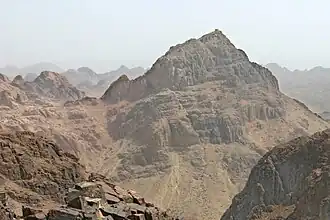

.jpg)
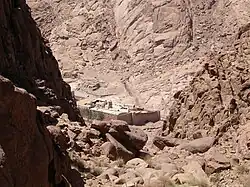 Saint Catherine's Monastery, looking down from Mount Sinai
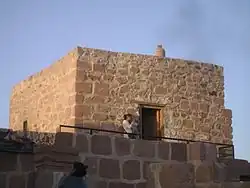 The mosque at the summit
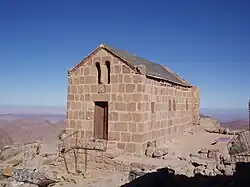 The chapel at the summit
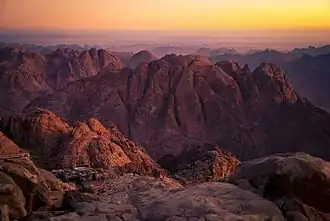 NNE view from the summit
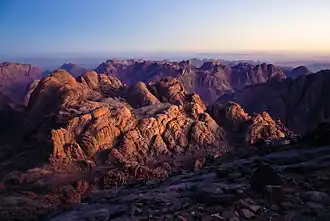 NW view from the summit
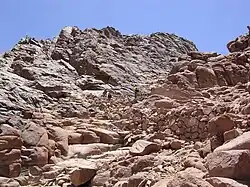 The last few meters of the climb up the mountain
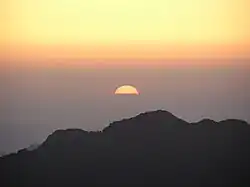 Sunrise

 Mount Sinai travel guide from Wikivoyage


