1898
| Years |
|---|
| Millennium |
| 2nd millennium |
| Centuries |
| Decades |
| Years |
| 1898 by topic |
|---|
| Humanities |
|
| By country |
|
| Other topics |
|
| Lists of leaders |
|
| Birth and death categories |
|
| Establishments and disestablishments categories |
|
| Works category |
|

Wikimedia Commons has media related to 1898.
1898 (MDCCCXCVIII) was a common year starting on Saturday of the Gregorian calendar and a common year starting on Thursday of the Julian calendar, the 1898th year of the Common Era (CE) and Anno Domini (AD) designations, the 898th year of the 2nd millennium, the 98th year of the 19th century, and the 9th year of the 1890s decade. As of the start of 1898, the Gregorian calendar was 12 days ahead of the Julian calendar, which remained in localized use until 1923.
Events

January
- January 1 – New York City annexes land from surrounding counties, creating the City of Greater New York as the world's second largest. The city is geographically divided into five boroughs: Manhattan, Brooklyn, Queens, The Bronx and Staten Island.
- January 13 – Novelist Émile Zola's open letter to the President of the French Republic on the Dreyfus affair, J'Accuse…!, is published on the front page of the Paris daily newspaper L'Aurore, accusing the government of wrongfully imprisoning Alfred Dreyfus and of antisemitism.
February
- February 12 – The automobile belonging to Henry Lindfield of Brighton rolls out of control down a hill in Purley, London, England, and hits a tree; thus he becomes the world's first fatality from an automobile accident on a public highway.[1]
- February 15 – Spanish–American War: The USS Maine explodes and sinks in Havana Harbor, Cuba, for reasons never fully established, killing 266 men. The event precipitates the United States' declaration of war on Spain, two months later.

February 15: USS Maine is sunk. - February 23 – Émile Zola is imprisoned in France, after writing J'Accuse…!.
March
- March 13 – Vladimir Lenin creates the Russian Social Democratic Labour Party in Minsk[2]
- March 14 – Association football and sports club BSC Young Boys is established in Bern, Switzerland, as the Fussballclub Young Boys.
- March 16 – In Melbourne the representatives of five colonies adopt a constitution, which will become the basis of the Commonwealth of Australia.[3]
- March 24 – Robert Allison of Port Carbon, Pennsylvania, becomes the first person to buy an American-built automobile, when he buys a Winton automobile that has been advertised in Scientific American.
- March 26 – The Sabie Game Reserve in South Africa is created, as the first officially designated game reserve.
April
- April 5 – Annie Oakley promotes the service of women in combat situations, with the United States military. On this day, she writes a letter to President McKinley "offering the government the services of a company of 50 'lady sharpshooters' who would provide their own arms and ammunition should war break out with Spain."[4]
- April 21 – Spanish–American War: The United States Navy begins a blockade of Cuban ports and the USS Nashville captures a Spanish merchant ship.
- April 23 – Spanish–American War: A conference of senior Spanish Navy officers led by naval minister Segismundo Bermejo decide to send Admiral Pascual Cervera's squadron to Cuba and Puerto Rico.
- April 25
- Spanish–American War: The United States declares war on Spain; the U.S. Congress announces that a state of war has existed since April 21 (later backdating this one more day to April 20).
- In Essen, German company Rheinisch-Westfälisches Elektrizitätswerk RWE is founded.[5]
- April 26 – An explosion in Santa Cruz, California, kills 13 workers, at the California Powder Works.[6]
- April 29 – The Paris Auto Show, the first large-scale commercial vehicle exhibition show, is held in Tuileries Garden.[7]
May
- May 1 – Spanish–American War – Battle of Manila Bay: Commodore Dewey destroys the Spanish squadron, in the first battle of the war, as well as the first battle in the Philippines Campaign.
- May 2 – Thousands of Chinese scholars and Beijing citizens seeking reforms protest in front of the capital control yuan.
- May 7–9 – Bava Beccaris massacre: Hundreds of demonstrators are killed, when General Fiorenzo Bava Beccaris orders troops to fire on a rally in Milan, Italy.
- May 8 – The first games of the Italian Football Federation are played, in which Genoa played against Torino.
- May 12 – Spanish–American War: The Puerto Rican Campaign begins, with the Bombardment of San Juan.
- May 22 – The German Federation football club SV Darmstadt 98 is formed.
- May 27 – The territory of Kwang-Chou-Wan is leased by China to France, according to the Treaty of 12 April 1892, as the Territoire de Kouang-Tchéou-Wan, forming part of French Indochina.[8]
- May 28 – Secondo Pia takes the first photographs of the Shroud of Turin and discovers that the image on the Shroud itself appears to be a photographic negative.

The original flag of the Philippines as conceived by General Emilio Aguinaldo. The blue is of a lighter shade than the currently mandated royal blue, the sun has eight points as currently but many more rays and it has a mythical face.
June
- June 1 – The Trans-Mississippi Exposition World's Fair opens, in Omaha, Nebraska.
- June 7 – William Ramsay and Morris Travers discover neon at their laboratory at University College London, after extracting it from liquid nitrogen.[9]
- June 9 – The British government arranges a 99-year rent of Hong Kong from China.
- June 10 – Tuone Udaina, the last known speaker of the Dalmatian language, is killed in an explosion.
- June 11 – The Guangxu Emperor announces the creation of what would later become Peking University.[10][11]
- June 12 – Philippine Declaration of Independence: After 333 years of Spanish dominance, General Emilio Aguinaldo declares the Philippines' independence from Spain.
- June 13 – Yukon Territory is formed in Canada, with Dawson chosen as its capital.
- June 19 – Food processing giant Nabisco is founded in New Jersey.
- June 21 – Spanish–American War: The United States captures Guam, making it the first U.S. overseas territory.
- June 28 – Effective date of the Curtis Act of 1898 which will lead to the dissolution of tribal and communal lands in Indian Territory and ultimately the creation of the State of Oklahoma in 1907.
July

- July 1 – Spanish–American War: Battle of San Juan Hill – United States troops (including Buffalo Soldiers and Theodore Roosevelt's Rough Riders) take a strategic position close to Santiago de Cuba from the Spanish.
- July 3
- Spanish–American War: Battle of Santiago de Cuba – The United States Navy destroys the Spanish Navy's Caribbean Squadron.
- American adventurer Joshua Slocum completes a 3-year solo circumnavigation of the world.
- July 4 – En route from New York to Le Havre, the ocean liner SS La Bourgogne collides with another ship and sinks off the coast of Sable Island with the loss of 549 lives.
- July 7 – The United States annexes the Hawaiian Islands.
- July 17 – Spanish–American War: Battle of Santiago Bay. Troops under United States General William R. Shafter take the city of Santiago de Cuba from the Spanish.
- July 18 – "The Adventures of Louis de Rougemont" first appear in The Wide World Magazine, as its August 1898 issue goes on sale.[12]
- July 25 – Spanish–American War: The United States invasion of Puerto Rico begins, with a landing at Guánica Bay.
August
- August 12 – Spanish–American War: Hostilities end between American and Spanish forces in Cuba.
- August 13 – Spanish–American War: Battle of Manila – By prior agreement, the Spanish commander surrenders the city of Manila to the United States, in order to keep it out of the hands of Filipino rebels, ending hostilities in the Philippines.
- August 20 – The Gornergrat railway opens, connecting Zermatt to the Gornergrat in Switzerland.
- August 21 – Clube de Regatas Vasco da Gama is founded in Rio de Janeiro.
- August 23 – The Southern Cross Expedition, the first British venture of the Heroic Age of Antarctic Exploration, sets sail from London.
- August 24 – Chickasaw and Choctaw tribes sign the Atoka Agreement, a requirement of the Curtis Act of 1898.
- August 25 – 700 Greeks and 15 Englishmen are slaughtered by the Turks in Heraklion, Greece, leading to the establishment of the autonomous Cretan State.
- August 28 – American pharmacist Caleb Bradham names his soft drink Pepsi-Cola.
September
- September 2 – Battle of Omdurman (Mahdist War): British and Egyptian troops led by Horatio Kitchener defeat Sudanese tribesmen led by Khalifa Abdullah al-Taashi, thus establishing British dominance in the Sudan. 11,000 Sudanese are killed and 1,600 wounded in the battle.[13]
- September 10 – Italian anarchist Luigi Lucheni assassinates Empress Elisabeth of Austria in Geneva, as an act of propaganda of the deed.
- September 18 – Fashoda Incident: A powerful flotilla of British gunboats arrives at the French-occupied fort of Fashoda on the White Nile, leading to a diplomatic stalemate, until French troops are ordered to withdraw on November 3.
- September 21
- Empress Dowager Cixi of China engineers a coup d'état, marking the end of the Hundred Days' Reform; the Guangxu Emperor is arrested.
- Geert Adriaans Boomgaard of Groningen in the Netherlands becomes the world's first validated supercentenarian.
October
- October 1 – The Vienna University of Economics and Business is founded, under the name K.u.K. Exportakademie.
- October 3 – Battle of Sugar Point: Ojibwe tribesmen defeat U.S. government troops, in northern Minnesota.
- October 6 – The Sinfonia Club, later to become the Phi Mu Alpha Sinfonia fraternity, is founded at the New England Conservatory of Music in Boston by Ossian Everett Mills.
- October 15 – The Fork Union Military Academy is founded, in Fork Union, Virginia.[14]
- October 21 – General Leonard Wood, the U.S. military governor of Cuba, issues a proclamation guaranteeing personal rights to the Cuban people.[15]
- October 22 – In a race riot near Harperville, Mississippi in the U.S., 14 African-Americans and one white person are killed.[15]
- October 23 – An anarchist, suspected of plotting the assassination of Germany's Kaiser Wilhelm II, is arrested in Egypt at Alexandria.[15]
- October 24 –
- The last Spanish soldiers in Puerto Rico, led by General Ortega, depart on ships to return to Spain.[15]
- U.S. President William McKinley extends the deadline for all Spanish troops to leave Cuba. Set to expire on December 1, the last day to depart is extended to January 1, 1899.[15]
- Chinese soldiers attack a party of British engineers at the Marco Polo Bridge on the Beijing to Hankou railway.[15]
- October 26 –
- October 27 – The Court of Cassation in Paris hears arguments from lawyers regarding a new trial in the Dreyfus case.[15] The Court grants the request on October 29.
- October 29 –
- October 30 – The Imperial Russian government announces that the leaders of the world's major nations have accepted the invitation of the Tsar to take part in a proposed conference on disarmament.[15]
- October 31 –
- The Lutheran Church of the Redeemer, Jerusalem, is dedicated after the Sultan of the Ottoman Empire presents the area, said to be the site of the Virgin Mary's home, to Germany's Roman Catholics.[15]
- Count Ōkuma Shigenobu, Japan's Prime Minister, announces his resignation along with that of his cabinet of ministers.[15]
November
- November 1 – Charles Dupuy forms a new government as Prime Minister of France following the resignation of Henri Brisson.[15]
- November 3 – With increasing violence threatened by rebels in China, the Russian fleet at Port Arthur and the British warships at Wei-Hai-Wei are readied for battle.[15]
- November 5 –
- Negros Revolution: Filipinos on the island of Negros revolt against Spanish rule and establish the short-lived Republic of Negros.[15]
- In China, an admiral of the Imperial Russian Navy and 40 sailors are denied permission by the Chinese government to proceed from Tientsin to Beijing.
- In the U.S., the collapse of a theater under construction in Detroit kills 11 workmen.[15]
- November 6 – The Japanese ambassador to China meets with the Emperor and the Empress Dowager at Beijing.[15]
- November 7 – The final meeting of the Cuban Assembly of the República de Cuba en Armas, which had been founded in 1895 during the Cuban War of Independence, is called to order by General Calixto García in the city of Santa Cruz del Sur. Domingo Méndez Capote is elected as president of the assembly.
- November 8 –
- Elections are held in the U.S. for all 357 seats in the House of Representatives, as well as for the governors and state legislature of 25 of the 45 states. With 179 needed for a majority, the Republican Party maintains control with 187 seats, despite losing 19; the Democratic party gains 37 to reach 124 seats; the Populist party losses all but five of its 22 seats, and the other 4 seats are controlled by smaller parties. Among Governors elected are Theodore Roosevelt as Governor of the state of New York.[15]
- Count Yamagata Aritomo forms a new government as Prime Minister of Japan.[15]
- November 9 – In the U.S., the racial violence in Phoenix, South Carolina, comes to an end after 12 African-Americans had been lynched.[15]
- November 10 –
- The Wilmington insurrection of 1898 begins as a coup d'état by the white Democratic Party of the U.S. state of North Carolina against the Republican Mayor of Wilmington. On the first day, a building housing a negro newspaper is burned and eight African Americans are killed.[15]
- The new United Central American States, a merger of El Salvador, Honduras and Nicaragua, places its capital in the Nicaraguan city of Chinandega.[15]
- Bartolomé Masó, the President of the República de Cuba en Armas that had been founded during the Cuban War of Independence, resigns.[15]
- November 11 – In Wilmington, negro leaders and white republicans are forced to leave the city by new government.[15]
- November 12 – The Earl of Minto takes office as the new Governor General of Canada.[15]
- November 17 – Fighting begins in Pana, Illinois, between striking white coal miners and black miners hired to replace them.[15]
- November 18 – The wreck of the ship Atalanta off the coast of the U.S. state of Oregon kills 28 of the 30 crew aboard.[15]
- November 19 – In U.S. college football, Harvard University defeats Yale University, 17 to 0, to close the season unbeaten.[15]
- November 21 – At the Paris conference to end the Spanish-American War, the U.S. commissioners offer $20,000,000 for purchase of the Philippines from Spain.[16]
- November 24 – Italy sends an ultimatum to the Sultan of Morocco concerning treatment of Italian residents.[16]
- November 26 –
- General Ramón Blanco resigns as the spanish Governor-General of Cuba and is replaced by General Adolfo Jiménez Castellanos.[16]
- A two-day blizzard known as the Portland Gale piles snow in Boston, severely impacting the Massachusetts fishing industry and several coastal New England towns.[16]
- The U.S. Marines arrive on USS Boston at Tientsin in China in order to guard the American legation at Beijing.[16]
- November 27 – All 115 people aboard the American steamer SS Portland are killed when the ship founders off of the caost of Cape Cod.[16]
- November 28 –The Spanish peace commissioners in Paris announce that they accept the offer of the U.S. to purchase the Philippines.[16]
- November 30 – The United Central American States, a merger of Nicaragua, Honduras and El Salvador, is formally dissolved after the government was unable to suppress a revolution in San Salvador.[16]
December
- December 1 –
- December 2 – The French Chamber of Deputies declines to endorse the policies of Prime Minister Charles Dupuy, with the vote failing 228 to 243.[16]
- President Alfaro of Ecuador suspends the govnerment and assumes a dictatorship over the South American nation.[16]
- December 3 – The Republic of Nicaragua issues a decree announcing its return to sovereignty as a separate nation after its union with El Salvador and Honduras collapses.[16]
- December 4 –
- President Zelaya of Nicaragua appoints a new cabinet free of ministers from El Salvador or Honduras.[16]
- The wreck of the British steamer SS Clan Drummond in the Bay of Biscay kills 37 people on board.[16]
- December 5 – A fire at a factory in the Russian city of Vilana (now Vilnius in Lithuania) kills 15 women and girls, most of whom die after jumping from the windows.[16]
- December 6 – The Chancellor of Germany opens the new session of the Reichstag and asks for an increase in the budget for the German Army.[16]
- December 9 – The first of the two Tsavo Man-Eaters is shot by John Henry Patterson; the second is killed 3 weeks later, after 135 railway construction workers have been killed by the lions.
- December 10 – The Treaty of Paris is signed, ending the Spanish–American War.
- December 12 – The French Chamber of Deputies voes 403 to 78 in favor of the Depuy government.[16]
- December 15 –
- A warrant issued in Paris for the arrest of Count Ferdinand Esterhazy in connection with the Dreyfus case.[16]
- A new President of the Swiss Confederation is elected.[16]
- The French Chamber of Deputies votes to extend a loan of 200,000,000 francs for the construction of railroads in French Indochina.[16]
- December 18 – Gaston de Chasseloup-Laubat sets the first official land speed record in an automobile, averaging 63.15 km/h (39.24 mph) over 1 km (0.62 mi) in France.
- December 21 – Prince George of Greece arrives in Crete as its High Commissioner, and is escorted by the flagships of four nations.[17]
- December 25 – Penny postage goes into effect throughout the British Empire, setting the cost of mailing a letter to most British colonies at one pence. Rates remain the same for mail to Australia, New Zealand and the Cape Colony.[17]
- December 26 – Marie and Pierre Curie announce the discovery of an element that they name radium.[17]
- December 27 – The French government delivers its secret dossier on the Dreyfus case to the Court of Cassation.[17]
- December 28 – The Swiss village of Airolo is buried in an avalanche.[17]
- December 29 –
- The Moscow Art Theatre production of The Seagull by Anton Chekhov opens.[18]
- King Umberto of Italy commutes the sentences of all prisoners who had been given the death penalty.[17]
- December 31 –
- Chief Justice Chambers of the Samoan Supreme Court rules that Malietoa Tanus is entitled to become King of Samoa, and holds that Mataafa is barred by the Treaty of Berlin.[17]
- French serial killer Joseph Vacher is executed at Bourg-en-Bresse.[19]
Unknown dates
- The first volume of the Linguistic Survey of India is published in Calcutta.
Births
January–March


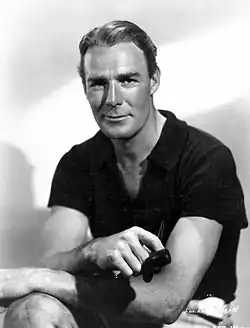


- January 1 – Viktor Ullmann, Austrian composer, conductor and pianist (d. 1944)
- January 3 – John Loder, British actor (d. 1988)
- January 6 – James Fitzmaurice, Irish aviation pioneer (d. 1965)
- January 7 – Art Baker, American actor (d. 1966)
- January 9 – Gracie Fields, British singer, actress and comedian (d. 1979)
- January 10 – Katharine Burr Blodgett, American physicist and chemist (d. 1979)
- January 13 – Kaj Munk, Danish playwright, Lutheran pastor and martyr (d. 1944)
- January 16 – Margaret Booth, American film editor (d. 2002)
- January 20 – Norma Varden, British-born American actress (d. 1989)
- January 21
- Rudolph Maté, Polish-born American cinematographer (d. 1964)
- Shah Ahmad Shah Qajar of Persia (d. 1930)
- January 22
- Sergei Eisenstein, Russian and Soviet film director (d. 1948)
- Elazar Shach, Lithuanian-born Israeli Haredi rabbi (d. 2001)
- January 23 – Randolph Scott, American film actor (d. 1987)
- January 24 – Karl Hermann Frank, German Nazi official, war criminal (d. 1946)
- January 25 – Hymie Weiss, Polish-American mob boss (d. 1926)
- January 28 – Milan Konjović, Serbian painter (d. 1993)
- January 31 – Hubert Renfro Knickerbocker, American journalist and author (d. 1949)
- February 1 – Leila Denmark, American pediatrician, supercentenarian (d. 2012)
- February 3 – Alvar Aalto, Finnish architect (d. 1976)
- February 5
- Denjirō Ōkōchi, Japanese actor (d. 1962)
- Ralph McGill, American journalist and editorialist (d.1969)
- February 6 – Melvin B. Tolson, American poet, educator, columnist, and politician (d. 1966)
- February 10
- Bertolt Brecht, German writer (d. 1956)
- Joseph Kessel, French journalist and author (d. 1979)[20]
- Margot Sponer, German philologist and resistance fighter (d. 1945)
- February 11
- Henry de La Falaise, French film director, Croix de guerre recipient (d. 1972)
- Leó Szilárd, Hungarian-American physicist (d. 1964)
- February 12
- Wallace Ford, British actor (d. 1966)
- Roy Harris, American composer (d. 1979)
- February 14
- Eva Novak, American actress (d. 1988)
- Fritz Zwicky, Swiss physicist, astronomer (d. 1974)
- February 15
- February 18
- Enzo Ferrari, Italian race car driver, automobile manufacturer (d. 1988)
- Luis Muñoz Marín, Puerto Rican poet, journalist and politician (d. 1980)
- February 24 – Kurt Tank, German aeronautical engineer (d. 1983)
- February 25 – William Astbury, English physicist, molecular biologist (d. 1961)
- February 28
- Hugh O'Flaherty, Irish Catholic priest (d. 1963)
- Molly Picon, American actress, lyricist (d. 1992)
- March 2 – Amélia Rey Colaço, Portuguese actress and impresario (d. 1990)
- March 3 – Emil Artin, Austrian mathematician (d. 1962)
- March 4 – Georges Dumézil, French philologist (d. 1986)
- March 5
- Zhou Enlai, Premier of the People's Republic of China (d. 1976)
- Soong Mei-ling, First Lady of China (d. 2003)
- March 6 – Therese Giehse, German actress (d. 1975)
- March 8 – Eben Dönges, acting Prime Minister of South Africa and elected President of South Africa (d. 1968)
- March 9 – Dudley Stamp, British geographer (d. 1966)
- March 11 – Dorothy Gish, American actress (d. 1968)
- March 13 – Henry Hathaway, American film director, producer (d. 1985)
- March 14 – Reginald Marsh, American painter (d. 1954)
- March 21 – Paul Alfred Weiss, Austrian biologist (d. 1989)
- March 23
- Erich Bey, German admiral (d. 1943)
- Madeleine de Bourbon-Busset, Duchess of Parma (d. 1984)
- March 30 – Joyce Carey, English actress (d. 1993)
April–June


- April 1 – William James Sidis, American mathematician (d. 1944)
- April 2 – Harindranath Chattopadhyay, Indian poet, actor and politician (d. 1990)
- April 3
- George Jessel, American comedian (d. 1981)
- Henry Luce, American magazine publisher (d. 1967)
- April 4 – Agnes Ayres, American actress (d. 1940)
- April 5 – Solange d'Ayen, French noblewoman, Duchess of Ayen and journalist (d. 1976)[21]
- April 9
- Paul Robeson, African-American actor, singer and political activist (d. 1976)
- Atsushi Watanabe, Japanese film actor (d. 1977)
- Therese Neumann, German Catholic mystic and stigmatic (d. 1962).
- April 12 – Lily Pons, French-American opera singer, actress (d. 1976)
- April 14
- Lee Tracy, American actor (d. 1968)
- Harold Stephen Black, American electrical engineer (d. 1983)
- April 19 – Constance Talmadge, American actress (d. 1973)
- April 26
- Vicente Aleixandre, Spanish writer, Nobel Prize laureate (d. 1984)
- John Grierson, Scottish documentary filmmaker (d. 1972)
- Tomu Uchida, Japanese film director (d. 1970)
- April 27 – Ludwig Bemelmans, Austrian-American writer and illustrator (d. 1962)
- April 29 – E. J. Bowen, British chemist (d. 1980)
- May 2 – Henry Hall, British bandleader (d. 1989)
- May 3
- Golda Meir, Prime Minister of Israel (d. 1978)[22]
- Septima Poinsette Clark, American educator and civil rights activist (d. 1987)
- May 5
- Blind Willie McTell, American singer (d. 1959)
- Hans Heinrich von Twardowski, German actor (d. 1958)
- May 6 – Konrad Henlein, Sudeten German Nazi leader (d. 1945)
- May 13 – Hisamuddin of Selangor, King of Malaysia (d. 1960)
- May 15
- Arletty, French model, actress (d. 1992)
- Tom Wintringham, British politician and historian (d. 1949)
- May 16
- Tamara de Lempicka, Polish Art Deco painter (d. 1980)
- Kenji Mizoguchi, Japanese film director (d. 1956)
- May 17
- Anagarika Govinda, German buddhist lama (d. 1985)
- A. J. Casson, Canadian painter (d. 1992)
- May 19 – Julius Evola, Italian philosopher (d. 1974)
- May 21 – Armand Hammer, American entrepreneur, art collector (d. 1990)
- May 23 – Frank McHugh, American actor (d. 1981)
- May 24 – Helen B. Taussig, American cardiologist (d. 1986)
- May 25 – Robert Aron, French historian and writer (d. 1975)
- May 28 – Andy Kirk, American jazz bandleader and saxophonist (d.1992)
- May 31 – Norman Vincent Peale, American clergyman (d. 1993)
- June 3 – Stuart H. Ingersoll, American admiral (d. 1983)
- June 4 – Harry Crosby, American publisher, poet (d. 1929)
- June 5 – Federico García Lorca, Spanish poet, playwright (d. 1936)
- June 6
- Ninette de Valois, Irish dancer, founder of The Royal Ballet (d. 2001)
- Jim Fouché, 5th President of South Africa (d. 1980)
- June 10 – Michel Hollard, French Resistance hero (d. 1993)
- June 11 – Lionel Penrose, English geneticist (d. 1972)
- June 17
- M. C. Escher, Dutch artist (d. 1972)
- Harry Patch, British World War I soldier, the last Tommy (d. 2009)
- June 22
- Weeratunge Edward Perera, Malaysian educator, businessman and social entrepreneur (d. 1982)
- Erich Maria Remarque, German writer (d. 1970)[23]
- June 23 – Winifred Holtby, English novelist and journalist (d. 1935)
- June 26
- Sa`id Al-Mufti, 3-time prime minister of Jordan (d. 1989)
- Willy Messerschmitt, German aircraft designer, manufacturer (d. 1978)
- June 30
- George Chandler, American actor (d. 1985)
- Josef Jakobs, German spy (d.1941)
July–September


- July 2
- George J. Folsey, American cinematographer (d. 1988)
- Anthony McAuliffe, American general (d. 1975)
- July 3
- Donald Healey, English motor engineer, race car driver (d. 1988)
- Stefanos Stefanopoulos, Prime Minister of Greece (d. 1982)
- July 4
- Gulzarilal Nanda, Indian politician, economist (d. 1998)
- Gertrude Lawrence, English actress, singer (d. 1952)
- July 6 – Hanns Eisler, German composer (d. 1962)
- July 7
- Teresa Hsu Chih, Chinese-born Singaporean social worker, supercentenarian (d. 2011)
- Arnold Horween, American Harvard Crimson, NFL football player (d. 1985)
- July 8 – Vic Oliver, Austrian-born British actor and radio comedian (d. 1964)
- July 14
- Happy Chandler, American politician (d. 1991)
- Youssef Wahbi, Egyptian actor, film director (d. 1982)
- July 17 – Berenice Abbott, American photographer (d. 1991)
- July 18 – John Stuart, Scottish actor (d. 1979)
- July 22
- Stephen Vincent Benét, American writer (d. 1943)[24]
- Alexander Calder, American artist (d. 1976)
- July 25 – Arthur Lubin, American film director (d. 1995)
- July 29 – Isidor Isaac Rabi, American physicist, Nobel Prize laureate (d. 1988)
- July 30 – Henry Moore, English sculptor (d. 1986)
- August 5 – Piero Sraffa, Italian political economist (d. 1983)
- August 11 – Peter Mohr Dam, 2-time prime minister of the Faroe Islands (d. 1968)
- August 12
- Maria Klenova, Russian marine geologist (d. 1976)
- Oscar Homolka, Austrian actor (d. 1978)
- August 13
- Mohamad Noah Omar, Malaysian politician (d. 1991)
- Regis Toomey, American actor (d. 1991)
- August 15
- Jan Brzechwa, Polish poet (d. 1966)
- Mohan Singh Oberoi, Indian businessman and politician (d. 2002)
- August 18
- August 19 – Eleanor Boardman, American actress (d. 1991)
- August 20
- Leopold Infeld, Polish physicist (d. 1968)
- Vilhelm Moberg, Swedish novelist, historian (d. 1973)
- August 21 – Herbert Mundin, English actor (d. 1939)
- August 26 – Peggy Guggenheim, American art collector (d. 1979)
- August 27 – John Hamilton, Canadian criminal, bank robber (d. 1934)
- August 29 – Preston Sturges, American director, writer (d. 1959)
- August 30 – Shirley Booth, American actress (d. 1992)
- September 1
- Violet Carson, British actress (d. 1983)
- Marilyn Miller, American actress, singer, and dancer (d. 1936)
- September 2 – Alfons Gorbach, 15th Chancellor of Austria (d. 1972)
- September 9 – Walter B. Rea, American university administrator and basketball player (d. 1970)
- September 10
- George Eldredge, American actor (d. 1977)
- Bessie Love, American actress (d. 1986)
- September 13
- László Baky, Hungarian Nazi leader (d. 1946)
- Emilio Núñez Portuondo, Cuban diplomat, lawyer and politician, 13th Prime Minister of Cuba (d. 1978)
- September 19 – Giuseppe Saragat, President of Italy (d. 1988)
- September 24 – Howard Florey, Australian-born pharmacologist, recipient of the Nobel Prize in Physiology or Medicine (d. 1968)
- September 26 – George Gershwin, American composer (d. 1937)
- September 29 – Trofim Lysenko, Russian biologist (d. 1976)
- September 30
- Renée Adorée, French actress (d. 1933)
- Princess Charlotte, Duchess of Valentinois (d. 1977), Monégasque princess
October–December


.jpg)
- October 6
- Arthur G. Jones-Williams, British aviator (d. 1929)
- Mitchell Leisen, American film director (d. 1972)
- Clarence Williams, American jazz pianist, composer (d. 1965)
- October 9 – Joe Sewell, American professional baseball player (d. 1990)
- October 10
- Lilly Daché, French milliner (d. 1989)
- Marie-Pierre Kœnig, French general, politician (d. 1970)
- October 15 – Boughera El Ouafi, Algerian athlete (d. 1959)
- October 16 – William O. Douglas, Associate Justice of the Supreme Court of the United States (d. 1980)
- October 17 – Shinichi Suzuki, Japanese musician, educator (d. 1998)
- October 18 – Lotte Lenya, Austrian actress, singer (d. 1981)
- October 24 – Peng Dehuai, Chinese military leader (d. 1974)
- October 28 – Abdul Khalek Hassouna, Egyptian diplomat, 2nd Secretary-General of the Arab League (d. 1992)
- October 29 – Vera Stanley Alder, English painter and mystic (d. 1984)
- October 30 – Raphael Girard, Swiss-Guatemalan ethnographer (d. 1982)
- November 11 – René Clair, French filmmaker, novelist, and non-fiction writer (d. 1981)
- November 12 – Leon Štukelj, Slovene gymnast (d. 1999)
- November 13 – Walter Karig, American naval captain and author (d. 1956)
- November 14 – Benjamin Fondane, Romanian-French Symbolist poet, critic and existentialist philosopher (d. 1944)
- November 15 – Sylvan Goldman, American businessman and inventor (d. 1984)
- November 17 – Colleen Clifford, Australian actress (d. 1996)
- November 18 – Joris Ivens, Dutch director (d. 1989)
- November 21 – René Magritte, Belgian artist (d. 1967)
- November 22 – Gabriel González Videla, 24th president of Chile (d. 1980)
- November 23 – Bess Flowers, American actress (d. 1984)
- November 24 – Liu Shaoqi, President of the People's Republic of China (d. 1969)
- November 26 – Karl Ziegler, German chemist, Nobel Prize laureate (d. 1973)
- November 29 – C. S. Lewis, British author (d. 1963)[25]
- November 30
- Firpo Marberry, American baseball pitcher (d. 1976)
- Link Lyman, American professional football player (d. 1972)
- December 2 – Indra Lal Roy, Indian World War I pilot (d. 1918)
- December 5 – Grace Moore, American opera singer, actress (d. 1947)
- December 6
- Alfred Eisenstaedt, American photojournalist (d. 1995)
- Gunnar Myrdal, Swedish sociologist, economist and Nobel Prize laureate (d. 1987)
- December 9 – Emmett Kelly, American circus clown (d. 1979)
- December 10 – Howard Beale, Australian politician and diplomat (d. 1983)
- December 14 – Lillian Randolph, American actress, singer (d. 1980)
- December 19 – Zheng Zhenduo, Chinese author, translator (d. 1958)
- December 20 – Irene Dunne, American actress (d. 1990)
- December 24 – Baby Dodds, American jazz drummer (d. 1959)
- December 27 – Inejiro Asanuma, Japanese politician (d. 1960)
- December 28 – Shigematsu Sakaibara, Japanese admiral and war criminal (d. 1947)
- December 31
- István Dobi, Hungarian prime minister (d. 1968)
- Ivan Miller, Canadian journalist and sportscaster (d. 1967)[26]
- Krishna Ballabh Sahay, Indian freedom fighter (d. 1974)
Unknown Dates:
- Ernest Born, American architect, designer, and artist (b. 1992)
- Robert Piguet, Swiss-born, Paris-based fashion designer (d. 1953)
- Henryk Sucharski, Polish military officer (d. 1946)
- Piotr Triebler, Polish sculptor (d. 1952)
Deaths
January–June

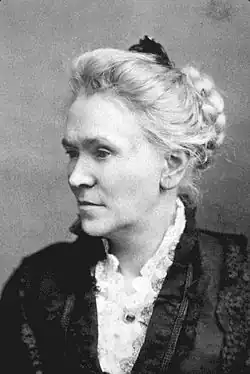

- January 3 – Lawrence Sullivan Ross, Confederate brigadier general, Texas governor, and president of Texas A&M University (b. 1838)
- January 14 – Lewis Carroll, British writer, mathematician (Alice in Wonderland) (b. 1832)
- January 16 – Charles Pelham Villiers, longest-serving MP in the British House of Commons (b. 1802)
- January 18 – Henry Liddell, English Dean of Christ Church, Oxford (b. 1811)
- January 26 – Cornelia J. M. Jordan, American lyricist (b. 1830)
- February 1 – Tsuboi Kōzō, Japanese admiral (b. 1843)
- February 6 – Abdul Samad of Selangor, Malaysian ruler, 4th Sultan of Selangor (b. 1804)
- February 16 – Thomas Bracken, author of the official national anthem of New Zealand (God Defend New Zealand) (b. 1843)
- March 1 – George Bruce Malleson, Indian officer, author (b. 1825)
- March 6 – Andrei Alexandrovich Popov, Russian admiral (b. 1821)
- March 10
- Marie-Eugénie de Jésus, French religious (b. 1817)
- George Müller, Prussian evangelist, founder of the Ashley Down orphanage (b. 1805)
- March 11 – William Rosecrans, California congressman, Register of the U.S. Treasury (b. 1819)
- March 15 – Sir Henry Bessemer, British engineer, inventor (b. 1813)
- March 16 – Aubrey Beardsley, British artist (b. 1872)[27]
- March 18 – Matilda Joslyn Gage, American feminist (b. 1826)
- March 27 – Sir Syed Ahmad Khan, Indian university founder (b. 1817)
- March 28 – Anton Seidl, Hungarian conductor (b. 1850)
- April 13 – Aurilla Furber, American author (b. 1847)
- April 15 – Te Keepa Te Rangihiwinui, Maori military leader
- April 18 – Gustave Moreau, French painter (b. 1826)
- April 29 – Mary Towne Burt, American benefactor (b. 1842)
- May 19 – William Ewart Gladstone, Prime Minister of the United Kingdom (b. 1809)
- May 22 – Edward Bellamy, American author (b. 1850)
- May 29 – Theodor Eimer, German zoologist (b. 1843)
- June 4 – Rosalie Olivecrona, Swedish feminist activist (b. 1823)
- June 10 – Tuone Udaina, Croatian-Italian last speaker of the Dalmatian language (b. 1821)
- June 14 – Dewitt Clinton Senter, American politician, 18th Governor of Tennessee (b. 1830)
- June 25 – Ferdinand Cohn, German biologist, bacteriologist and microbiologist (b. 1828)
July–December


- July 1
- Siegfried Marcus, Austrian automobile pioneer (b. 1831)
- Joaquín Vara de Rey y Rubio, Spanish general (killed in action) (b. 1841)
- July 5 – Richard Pankhurst, English lawyer, radical and supporter of women's rights (b. 1834)
- July 8 – Soapy Smith, American con artist and gangster (b. 1860)
- July 14 – Louis-François Richer Laflèche, Roman Catholic Bishop of Trois-Rivières, Native American missionary (b. 1818)
- July 30 – Otto von Bismarck, German statesman (b. 1815)[28]
- August 8 – Eugène Boudin, French painter (b. 1824)
- August 11 – Sophia Braeunlich, American business manager (b. 1854)
- August 23 – Félicien Rops, Belgian artist (b. 1833)
- September 2 – Wilford Woodruff, fourth president of the Church of Jesus Christ of Latter-day Saints (b. 1807)
- September 5 – Sarah Emma Edmonds, Canadian nurse, spy (b. 1841)
- September 9 – Stéphane Mallarmé, French poet (b. 1842)
- September 10 – Empress Elisabeth of Austria, empress consort of Austria, queen consort of Hungary (assassinated) (b. 1837)
- September 16 – Ramón Emeterio Betances, Puerto Rican politician, medical doctor and diplomat (b. 1827)
- September 19 – Sir George Grey, 11th Premier of New Zealand (b. 1812)
- September 20 – Theodor Fontane, German writer (b. 1819)[29]
- September 26 – Fanny Davenport, American actress (b. 1850)
- September 28 – Tan Sitong, Chinese revolutionary (executed) (b. 1865)
- September 29 – Louise of Hesse-Kassel, German princess, queen consort of Christian IX of Denmark (b. 1817)
- October 24 – Pierre Puvis de Chavannes, French painter (b. 1824)
- November 2 – George Goyder, surveyor-general of South Australia (b. 1826)
- November 20 – Sir John Fowler, British civil engineer (b. 1817)
- December 24 – Charbel Makhluf, Lebanese Maronite, Roman Catholic and Eastern Catholic monk, priest and saint (b. 1828)
- December 25 – Laura Gundersen, Norwegian actress (b. 1832)
- December 29 – Ilia Solomonovich Abelman, Russian astronomer (b. 1866)[30]
Date unknown
- Sotirios Sotiropoulos, Greek economist, politician (b. 1831)
References
- ^ Penguin Pocket On This Day. Penguin Reference Library. Penguin. 2006. ISBN 0-14-102715-0.
- ^ "1st congress of the Russian Social Democratic Labor Party opened in Minsk". Presidential Library. Retrieved 2025-07-27.
- ^ LaNauze, J. A. (1972). The Making of the Australian Constitution. Melbourne University Press.
- ^ The National Archives and Records Administration (NARA) Archived November 7, 2020, at the Wayback Machine. "Letter to President William McKinley from Annie Oakley". Retrieved January 24, 2008.
- ^ Asriel, Camillo J. (1930). Das R.W.E., Rheinisch-Westfälisches Elektrizitätswerk A.-G., Essen a.d. Ruhr (in German). Girsberger & Company. p. 1.
- ^ "The California Powder Works". Santa Cruz Public Library Local History Articles. Archived from the original on June 26, 2010. Retrieved 2011-11-21.
- ^ Authority, International Driving. "Paris Motor Show". International Driving Authority. Retrieved 2024-07-02.
- ^ Choveaux, A. (1925). "Situation économique du territoire de Kouang-Tchéou-Wan en 1923". Annales de Géographie. 34 (187): 74–77. doi:10.3406/geo.1925.8102.
- ^ Ribbat, Christoph (2011). Flickering Light: A History of Neon. Reaktion Books. p. 23.
- ^ "[Peking University Landmark] Peking University Hall". english.pku.edu.cn. Retrieved 2024-06-23.
- ^ Harry Edward King. 1911. UNITED STATES BUREAU OF EDUCATION. THE EDUCATIONAL SYSTEM OF CHINA AS RECENTLY RECONSTRUCTED. https://files.eric.ed.gov/fulltext/ED542944.pdf
- ^ Stratmann, Linda (2010). Fraudsters and Charlatans: A Peek at Some of History's Greatest Rogues. Stroud: The History Press.
- ^ Boahen, A. Adu (1987). African Perspectives on Colonialism. Baltimore, Md: Johns Hopkins University Press. p. 48. ISBN 9780801839313.
- ^ Salmon, John S. (1994). A Guidebook to Virginia's Historical Markers. University of Virginia Press. p. 48.
- ^ a b c d e f g h i j k l m n o p q r s t u v w x y z aa ab ac ad The American Monthly Review of Reviews (December 1898), pp. 641-646
- ^ a b c d e f g h i j k l m n o p q r s t u The American Monthly Review of Reviews (January 1899), pp. 24-28
- ^ a b c d e f g The American Monthly Review of Reviews (February 1899), pp. 154-157
- ^ Benedetti, Jean (1999). Stanislavski: His Life and Art (Revised ed.). London: Methuen. ISBN 0-413-52520-1.
- ^ Hunt, Liz (March 1, 2011). "The forensic mind of the original Dr Death". The Telegraph. Archived from the original on January 12, 2022.
- ^ Bettina Liebowitz Knapp (1976). French novelists speak out. Whitston Publishing Company. p. 65. ISBN 9780878750849.
- ^ "Fichier des personnes décédées - DE LABRIFFE Solange Marie Christine Louise | Amiens 05/04/1898 - Paris 03/11/1976". matchID - Moteur de recherche des décès. 1976. Retrieved 2024-02-22.
- ^ "Golda Meir". Britannica Presents 100 Women Trailblazers. 16 February 2019. Retrieved 29 July 2021.
- ^ "Erich Maria Remarque Is Dead; Novels Recorded Agony of War". The New York Times. Sep 26, 1970.
- ^ Masterplots Cyclopedia of World Authors. Salem Press. 1958. p. 96.
- ^ "C.S. Lewis | Biography, Books, Mere Christianity, Narnia, & Facts | Britannica". www.britannica.com. Retrieved 19 June 2023.
- ^ Haworth, S. (January 1899), Schedule A: Births, Wentworth County, Ontario, p. 292
{{citation}}: CS1 maint: location missing publisher (link) - ^ Crawford, Alan (23 September 2004). "Beardsley, Aubrey Vincent (1872–1898), illustrator". Oxford Dictionary of National Biography. Oxford Dictionary of National Biography (online ed.). Oxford University Press. doi:10.1093/ref:odnb/1821. (Subscription or UK public library membership required.)
- ^ Steinberg, Jonathan (2011). Bismarck: A Life. Oxford University Press. pp. 462–3. ISBN 978-0-19-997539-6.
- ^ Otto Drude (1994). Theodor Fontane. Insel Verlag, Frankfurt. p. 176.
- ^
 Herman Rosenthal (1901). "ABELMAN, ILIA SOLOMONOVICH". In Singer, Isidore; et al. (eds.). The Jewish Encyclopedia. Vol. 1. New York: Funk & Wagnalls. p. 52.
Sources
- Morro Castle, Havana Harbor. 00694250. Thomas Edison. Archived from the original on December 12, 2012. Retrieved May 25, 2009.
Filmed ca. March 17 to April 1, 1898
Morro Castle (fortress) downloadable videos. (1898 Morro Castle, Havana Harbor, YouTube stream. Thomas Edison. Archived from the original on March 5, 2016. Retrieved 2009-05-07. needs Flash) - 1898 U S Battleship Indiana. Thomas Edison. Archived from the original on 2021-12-11. Retrieved 2009-05-07. view of USS Indiana (BB-1) (needs Flash)
- 1898 Transport Ship Whitney Leaving Dock. Thomas Edison. Archived from the original on 2021-12-11. Retrieved 2009-05-07.
1898-05-20
(needs Flash) - 1898 10th U.S. Infantry, 2nd Battalion leaving Train. Thomas Edison. Archived from the original on 2021-12-11. Retrieved 2009-05-20.
1898-05-20
view of 10th U.S. Infantry, 2nd Battalion (needs Flash) - 1898 U.S. Cavalry Supplies Unloading at Tampa, Florida. Thomas Edison. Archived from the original on 2021-12-11. Retrieved 2009-05-07.
1898-05-20
view of Tampa, Florida (needs Flash) - 1898 Military Camp at Tampa, taken from train. Thomas Edison. Archived from the original on 2021-12-11. Retrieved 2009-05-07.
1898-05-20
view of Tampa, Florida (needs Flash) - 1898 Cuban Refugees Waiting for Rations. Thomas Edison. Archived from the original on 2021-12-11. Retrieved 2009-05-07.
1898-05-20
(needs Flash) - 1898 Colored Troops Disembarking. Thomas Edison. Archived from the original on 2021-12-11. Retrieved 2009-05-07.
1898-05-20
(needs Flash) - 1898 Troops Ship for the Philippines. Thomas Edison. Archived from the original on 2021-12-11. Retrieved 2009-05-07.
June 1898
(needs Flash) - 1898 U.S. troops landing at Daiquirí, Cuba. Thomas Edison. Archived from the original on 2021-12-11. Retrieved 2009-05-07.
1898-08-05
view of Daiquirí after the United States invasion of Cuba in the Spanish–American War (needs Flash) - 1898 Major General Shafter. Thomas Edison. Archived from the original on 2021-12-11. Retrieved 2009-05-07.
1898-08-05
view of Major General Shafter (needs Flash) - 1898 Troops making road in front of Santiago. Thomas Edison. Archived from the original on 2021-12-11. Retrieved 2009-05-07.
1898-09-03
view of Santiago (needs Flash)